PS5 Pro: The Most Expensive Way to Notice a Frame Rate

Hardware Review · Purchased December 9, 2024 · $1,075.18 CAD via EB Games

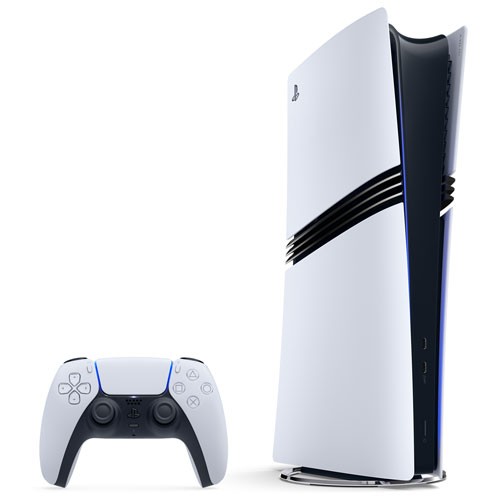
PlayStation 5 Pro console
The PS5 Pro. Photo via Best Buy Canada.

This was the single biggest console purchase of my year, and it is also the one I have gone back and forth on the most while writing about it.

The Background

Sony announced the PS5 Pro in September 2024 with Canadian pricing set at $959.99 before tax, positioning it as a mid-generation refresh rather than a true next console: better and more consistent ray tracing, higher and steadier frame rates in supported titles, and a beefed-up GPU, all while keeping the same basic PS5 software ecosystem and game library rather than starting over. It also ships with a built-in 2TB SSD, up from the base model’s smaller drive, which mattered to me given how quickly modern installs eat through storage.

I picked mine up at EB Games in early December, and the total I paid ($1,075.18) reflects tax plus whatever accessory or bundle got attached at checkout on top of that base $959.99 price. By the time I bought in, launch week chaos had settled and stock was reasonably available, which was one small mercy in an otherwise expensive month.

Living With It

The honest starting point here is that the PS5 Pro is a real, measurable upgrade, but only in games that specifically support its enhancements. Sony calls this “PS5 Pro Enhanced,” and through the back half of 2024 that list was still filling in rather than covering the full library. In supported titles, the difference is genuinely noticeable: steadier frame rates during busy scenes, meaningfully improved ray-traced reflections and lighting, and in some cases the ability to run performance-mode frame rates at what used to be quality-mode resolution. In anything outside that enhanced list, you are playing the exact same experience as a base PS5, just on more expensive hardware.

The built-in 2TB drive is a genuinely welcome quality-of-life improvement on its own, and it means less immediate pressure to add an internal expansion drive the way base PS5 owners often need to.

Where this purchase gets harder to defend is the price-to-benefit math. Going from a base PS5 to a PS5 Pro costs roughly the same as buying a second console, for improvements that, outside of enhanced titles, you will not notice at all during actual play. This is squarely a purchase for people who already care about frame pacing, resolution, and ray tracing fidelity at a level most casual players simply do not track moment to moment.

What I Liked

  • Noticeably better and steadier performance in PS5 Pro Enhanced titles
  • Meaningfully improved ray tracing quality where supported
  • Built-in 2TB SSD solves the storage anxiety base PS5 owners deal with
  • No ecosystem changes, every existing game and save just works

What I Didn’t

  • Enhanced title support was still incomplete through the back half of 2024
  • No visible benefit at all in non-enhanced games, which is most of the existing library
  • At over $1,000 CAD out the door, this is priced like a luxury upgrade, not a necessary one
  • Requires you to already own or be replacing a base PS5, so the real cost comparison is steep

The Value Verdict

Rating: 3/5

I do not regret this purchase, but I also cannot recommend it to everyone. If you are the kind of player who genuinely notices frame pacing dips and resolution compromises, and you have the specific games in your rotation that support the Pro enhancements, this delivers real, tangible improvement. If you are a more casual player, save the money and put it toward the games themselves.

Where to Buy

The Astro Bot DualSense: Buying a Controller for the Paint Job

Hardware Review · Purchased September 6, 2024 · $111.98 CAD via EB Games

Astro Bot Limited Edition DualSense wireless controller
The Astro Bot Limited Edition DualSense. Photo via PlayStation.Blog.

Sometimes you buy a piece of hardware for what it does. Sometimes you buy it for what it looks like sitting on your shelf. This is very much the second kind of purchase, and I am not going to pretend otherwise.

The Background

Astro Bot launched in September 2024 to the kind of reception that immediately tells you something special happened: near-universal critical acclaim, and eventually the Game Awards’ Game of the Year trophy. Sony backed the launch with a limited edition DualSense controller in Astro Bot’s cream-and-blue colour scheme, complete with small Astro Bot etchings and a matching light bar treatment, and it sold out fast enough that I count myself lucky to have grabbed one at EB Games on launch week rather than hunting resale listings afterward.

I bought this the same day as the physical copy of the game and the digital deluxe upgrade, so this was very much a “go all in on launch day” purchase rather than a considered, separate decision.

Living With It

Let’s be completely honest about what this controller is: a completely standard DualSense with a limited edition paint job. The haptics, adaptive triggers, built-in speaker, and touchpad all function identically to the roughly $85 base model. There is no functional upgrade hiding in here, no exclusive feature, nothing that makes Astro Bot the game play or feel any different than it would on a plain black pad.

What you are paying the premium for is entirely the aesthetics, and on that front it delivers. The colourway is genuinely well done, restrained rather than garish, and it photographs nicely if you are the type to post a setup shot. Because these sold out quickly around launch, there is also a small collector’s satisfaction in having one from the actual release window rather than picking one up later.

If I am being fully honest with myself, the DualSense form factor itself is what makes this purchase easy to justify at all: it is already a genuinely excellent controller before you factor in any paint job, with haptic feedback that meaningfully changes how a lot of PS5 games feel to play.

What I Liked

  • Clean, well-executed colour scheme that does not feel gimmicky
  • Same excellent DualSense hardware underneath (haptics, adaptive triggers, speaker)
  • Limited release window adds a bit of genuine collector’s value
  • Paired perfectly with launch day for one of the best games of the year

What I Didn’t

  • Zero functional difference from the roughly $85 base DualSense
  • Pure premium-for-aesthetics purchase, easy to talk yourself out of if you are budget conscious
  • Limited stock meant a real risk of missing out entirely if I had waited even a week

The Value Verdict

Rating: 3/5

Judge this one by what it actually is: a paint job on hardware you would probably buy anyway. If you love Astro Bot and want the shelf piece to match, it delivers exactly what it promises and nothing more. If you are looking at this as a controller upgrade, save the premium and get the base model instead.

Where to Buy

U-Turn Audio Orbit: My One Real “Adult Hobby” Purchase of the Year

Hardware Review · Purchased July 18, 2024 · $713.15 CAD ($506.76 USD) via Uturnaudio.com

U-Turn Audio Orbit Plus turntable in black
The U-Turn Audio Orbit Plus. Photo via U-Turn Audio.

Every collection of receipts has one purchase that does not really belong with the rest, and for 2024, this was mine.

The Background

I have owned a couple of cheap, all-in-one turntables over the years, the kind that come with built-in speakers and a suitcase-style lid, and they were fine as an introduction but never satisfying as an actual listening experience. By mid-2024 I wanted to do this properly: a real hi-fi component, built by people who actually care about turntable design, rather than a novelty appliance shaped like one.

U-Turn Audio makes exactly that case for themselves. They are a small manufacturer out of Woburn, Massachusetts, hand-assembling their Orbit line in-house rather than outsourcing to a generic factory, and the line is specifically designed to be upgraded piece by piece over time (better cartridge, better platter material, an acrylic dust cover, and so on) instead of being replaced outright once you outgrow the base model. I ordered directly from their site rather than through a retailer, which is how the charge shows up in USD on my card even though I am in Canada.

Living With It

Setup took maybe twenty minutes, most of which was carefully balancing the tonearm and checking tracking force with the included tools, a process U-Turn walks you through clearly rather than assuming prior turntable experience. That attention to a smooth setup experience tracks with the brand’s whole reputation: this is a company that wants first-time buyers to succeed, not just enthusiasts who already know what they are doing.

The actual sound quality difference versus my old all-in-one player was immediate and obvious, not a subtle audiophile distinction you need trained ears to notice. Vocals sit clearer in the mix, bass has actual definition instead of being a vague rumble, and surface noise on well-kept records is noticeably lower thanks to a proper platter and belt-drive motor isolating vibration the way a cheap turntable simply does not.

What I appreciate most, a year-plus in, is that this does not feel like a purchase I will outgrow. If I want a better cartridge down the line, or the acrylic platter upgrade, those exist as add-ons rather than requiring a whole new turntable. The honest tradeoff: this is a genuine hi-fi component, and it asks a little more of you than a plug-and-play system. You need a separate amp or powered speakers, and you need to actually care about things like anti-skate and tracking force, at least a little, to get the most out of it.

What I Liked

  • Immediately, clearly better sound than any all-in-one turntable I have owned
  • Hand-assembled build quality that feels purposeful, not mass-produced
  • Genuine upgrade path if I want to improve components later instead of replacing the whole unit
  • Setup process designed for turntable beginners, not just enthusiasts

What I Didn’t

  • Requires a separate amp or powered speakers depending on configuration, an extra cost and extra research
  • Not a casual, walk-away appliance the way a suitcase player is
  • At $713 CAD, this is a real financial commitment for what is, at the end of the day, one hobby among several

The Value Verdict

Rating: 5/5

If you just want to spin records occasionally without thinking about it, this is more turntable, and more money, than you need. But if you are serious about actually listening to vinyl rather than displaying it, this is one of the best entry points into real hi-fi you can buy, built by a company that clearly still cares about the format.

Where to Buy

Sony WH-1000XM5: The Headphones I Use for Everything Except Actually Gaming

Hardware Review · Purchased April 29, 2024 · $391.72 CAD via Amazon

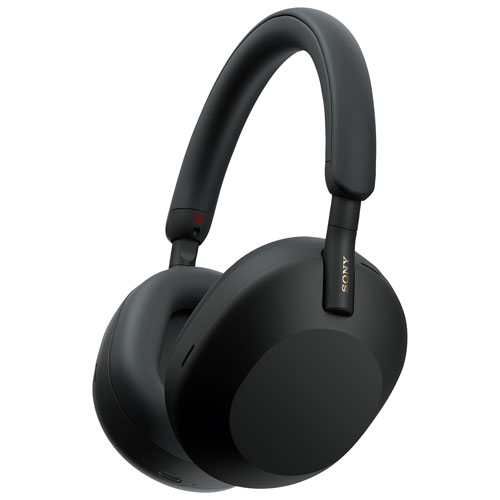
Sony WH-1000XM5 wireless noise cancelling headphones in black
The Sony WH-1000XM5 in black. Photo via Best Buy Canada.

I want to be upfront about something before this review even starts: the WH-1000XM5 is not a gaming headset, and that is exactly why I bought it.

The Background

I already owned a dedicated gaming headset before this purchase, and it was fine for what it was. What it was not was a headphone I wanted to wear on a flight, during a work call, or on a walk. By spring of 2024 I had decided I wanted one really good pair of noise-cancelling headphones that could do double duty across my actual life, gaming included, rather than a gaming-specific headset that only made sense at my desk. Sony’s flagship XM line has been the benchmark in consumer ANC headphones for several generations running, and the XM5 is the current version of that reputation.

I paid close to full retail at $391.72, picked up from Amazon in late April. In hindsight, that was the one mistake in this purchase: these go on sale often enough, sometimes $100 or more off, that patience would have paid off. If you are considering the same pair, it is worth watching prices for a couple of weeks before buying.

Living With It

The noise cancelling is the headline feature and it delivers. Airplane cabin noise, HVAC hum, open-office chatter, all of it gets flattened to a low murmur, and the transparency mode (for when you need to hear someone talking to you without taking the headphones off) is genuinely useful rather than a gimmick. Sound signature is clean and slightly warm, not the bass-forward tuning a lot of consumer headphones lean into, which I personally prefer for long listening sessions since it does not fatigue the ears the way an aggressive bass boost can.

Comfort is where these earn their keep for me. I use them for hours at a stretch, gaming in the evening after wearing them all day for work calls, and the clamping force and ear cushion padding hold up without the hot-ear feeling some over-ear headphones give you after a few hours.

The genuine complaint, and one that shows up in basically every review of this generation, is that Sony dropped the folding hinge design from the XM4. The XM5 collapses flatter but does not fold in on itself, so the case is noticeably bigger and less pocketable in a bag. It is a small thing until you are the one repacking a carry-on around it.

For gaming specifically: these connect over Bluetooth, not a wired connection with a dedicated gaming DAC, so if you are chasing the lowest possible input latency for competitive play, this is not the tool for that job. For anything else, story-driven games, general couch gaming, streaming, they sound excellent.

What I Liked

  • Best-in-class noise cancelling for the price bracket
  • Comfortable enough for genuinely long sessions
  • Clean, accurate sound signature that does not fatigue over time
  • Multi-device pairing makes switching between PS5, phone, and laptop painless

What I Didn’t

  • No longer folds flat, bigger case than the previous generation
  • Bluetooth-only means it is not ideal for latency-sensitive competitive gaming
  • I paid full price when patience would have saved a real amount of money

The Value Verdict

Rating: 4/5

As a headphone that has to work across my whole day, not just gaming, this was the right call, and the audio and noise cancelling quality genuinely justify the price bracket. The only real ding is on me: buying at full retail when a sale was probably two or three weeks away the whole time. If you want one pair of headphones to do everything reasonably well, this earns its reputation. If you specifically want a gaming headset, look elsewhere first.

Where to Buy

The Unglamorous MVP: Living With an 18TB Hard Drive

Hardware Review · Purchased January 12, 2024 · $375.19 CAD via Amazon

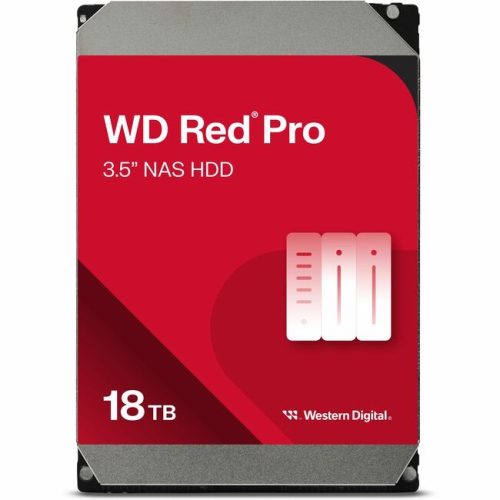
Western Digital Red Pro 18TB internal hard drive
The WD Red Pro 18TB. Photo via Best Buy Canada.

There is no cool way to open a post about a hard drive, so I am not going to try. This is the least exciting purchase in my entire 2024 spreadsheet, and it might also be the most quietly important one.

The Background

By the start of 2024, my storage situation had become a genuine problem. Between a PS5 library that keeps creeping toward the 100GB-per-title mark, a PC full of capture footage for content work, and years of accumulated screenshots, saves, and half-finished projects, I had run out of places to put things. I was doing the thing everyone does before they finally buy more storage: uninstalling one game to install another, then reinstalling the first one a week later, over and over, wasting hours on downloads I had already paid the bandwidth cost for once.

The fix was a Western Digital 18TB internal drive, picked up from Amazon in mid-January and dropped into an external enclosure I already had on hand. I did not go for anything exotic here. WD’s higher-capacity drives (the Red Pro NAS line and the Gold enterprise line both top out in this range) are built for exactly this kind of “just needs to work for years” duty, running at 7200 RPM with conventional (CMR, not the cheaper shingled SMR) recording, which matters if you care about consistent write speeds rather than just raw capacity.

Living With It

Eighteen terabytes sounds abstract until you actually fill part of it, and then it very quickly stops feeling abstract. I moved my entire back catalogue of finished games onto it, archived a full year of video project files, and still have the majority of the drive free. For the first time in years, I am not making triage decisions about what gets to stay installed.

Performance-wise, there is genuinely nothing to report, which is the highest compliment I can pay a hard drive. No clicking, no dropped connections, no thermal throttling once it warmed up in the enclosure. It just sits there, spinning, doing the one job I bought it to do. I do keep it plugged into a powered enclosure rather than running off bus power, which I would recommend to anyone considering a drive this size: capacity like this pulls more consistently than a laptop USB port wants to provide over the long haul.

The one thing worth knowing going in is that drives at this capacity are loud in the way spinning platters are loud, a low, steady hum plus the occasional seek click, especially compared to any SSD you might be used to. If your setup lives somewhere quiet, like a bedroom office, that is worth factoring in before you buy the same thing.

What I Liked

  • Effectively solved my storage problem for the foreseeable future
  • CMR recording means consistent write speeds, no slowdowns on large transfers
  • Reliable, boring, does exactly what it says
  • Strong cost-per-terabyte value compared to smaller drives or premium SSD storage at this capacity

What I Didn’t

  • Audibly louder than SSD-based storage, noticeable in a quiet room
  • Needs a proper powered enclosure to perform reliably at this size, which is an extra cost if you do not already own one
  • Eighteen terabytes is enough that you will eventually need a backup strategy for it too, which is its own project

The Value Verdict

Rating: 4/5

This is not a purchase that generates excitement, but it is one of the better dollar-for-dollar decisions in my entire 2024 spending. Cost per terabyte on WD’s larger drives consistently beats smaller capacities and beats SSD storage by a wide margin, and a year-plus in, mine has not given me a single reason to think about it. If your library has outgrown your storage the way mine had, this is exactly the unglamorous fix to make.

Where to Buy